

As we are now well into the summer months, we must be more aware of how the weather can affect our horses. Gradual and long periods of hot weather have less of a health risk to horses than sudden spikes in temperature, particularly immediately before or during competition.
Horses can acclimatise to different weather conditions and horses living in hot climates are comfortable competing in hotter weather, meaning that horses which are accustomed to cooler temperatures (such as the UK) are likely to be at risk if they are then competed during a heatwave.
How do horses naturally keep cool?
Horses have a surprisingly small skin surface and a large amount of muscle in relation to their body weight, which means they do not cool down as easily as we do. Sweating is essential for them to keep cool as the sweat will evaporate from the skin’s surface and transport heat away from it.
How to help cool your horse down
Post-exercise, you should always make sure you take time to cool your horse down properly. In hot temperatures, horses will warm up very quickly and they will need to release some heat which is not so easy as they have a large amount of muscle mass.
Leaving water on your horse does NOT increase heat!
Although most people seem to agree that water is key in reducing temperature, many still say, incorrectly, that the water must be scraped off – with many often insisting that leaving a horse wet can make it hotter.
After exercise, if your horse is sweaty, either hose them off or use a sponge and bucket to cool them down. Not only will this help to remove sweat, but it will also aid with dissipating heat from the body and lower their core temperature. Repeat sponging/hosing until they’ve cooled down properly, which can take a while for the cold water to properly penetrate the fat layer and reach the large muscle groups.
Research has found that there are two principles at work when cooling horses with water:
- The conductive transfer of heat. When there are two “bodies” in direct contact, in this case the horse and the water, heat will pass from the hotter body to the cooler until they are the same temperature. So cold water put on a horse will get warmer – which may explain why people think it is heating the horse up – but it is because the horse is losing heat to the water.
- The other method by which water cools horses is evaporation. The evaporation of water uses up energy and cools the surface on which the water sits. This is efficient (there is a lot of cooling for a little water), and means a wet horse will stay cooler than a dry one, but evaporative cooling is much slower than conductive transfer. And while scraping water off will do no harm to a warm horse, if the horse is dangerously hot, it can slow the cooling process.
Hydration is key
A horse can sweat faster than most other animals and, in the UK, where we tend to have relatively moderate humidity, this helps a horse keep cool. However, sweating gives rise to increased likelihood of dehydration, which in turn raises the risk of colic and respiratory disease.
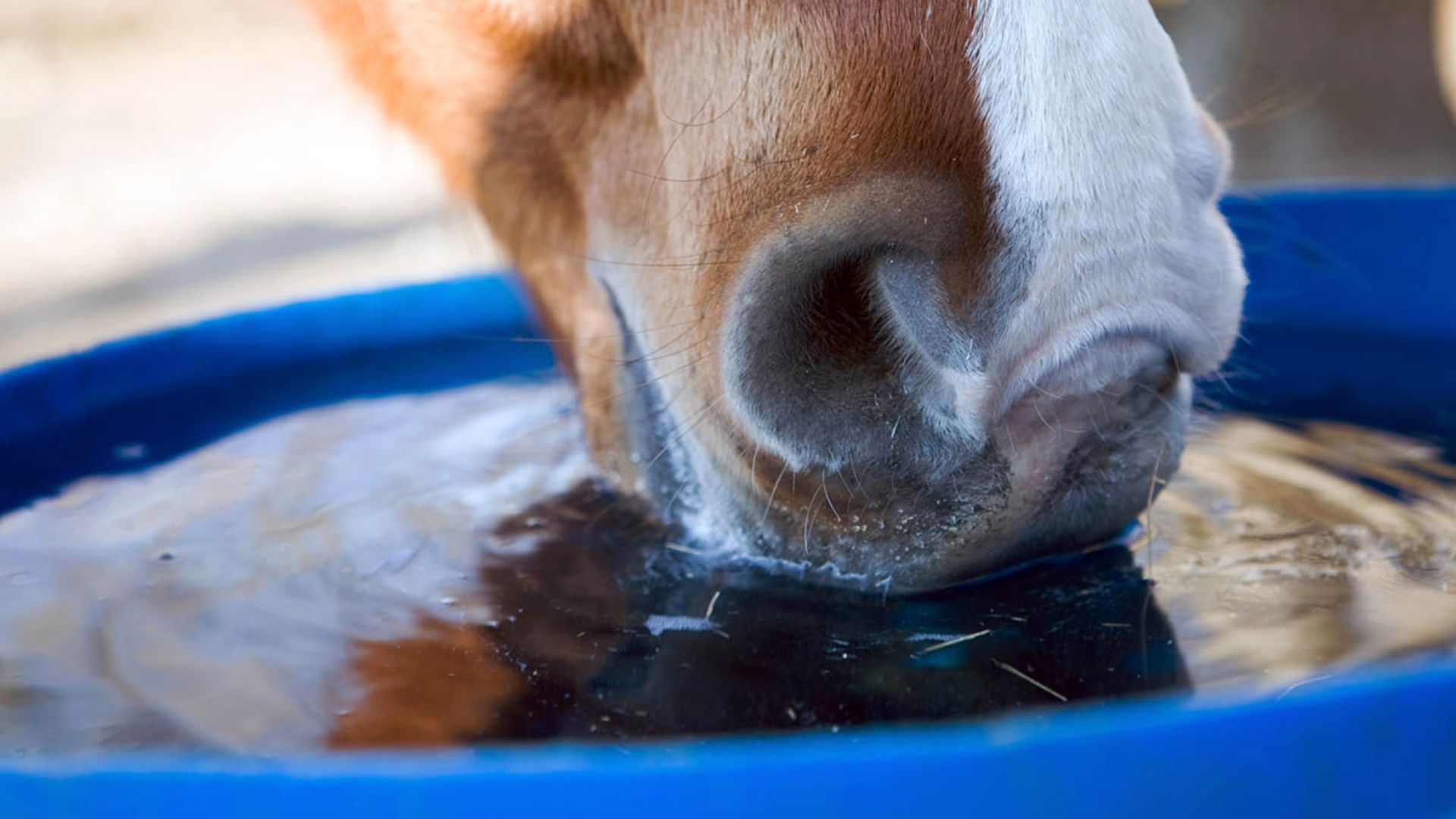
It’s a myth that you shouldn’t offer your horse water straightaway after exercise. Doing so will give them the opportunity to replace any water lost through sweating, will help them cool down faster and aid with regulating their body temperature. Giving ice-cold water to horses to drink does no harm, contrary to popular belief, although it has been shown that horses will drink more if the water is at 20-25°C rather than 10, or 30°C.
The process of sweating can also lead to electrolyte imbalance and an increased risk of problems such as reduced performance, tying-up, and “thumps” (synchronous diaphragmatic flutter) which whilst most common in endurance horses, can also occur in eventers. In these conditions, a salt block is unlikely to provide sufficient remedy and appropriate feed supplements and appropriate electrolytes will prove beneficial. After intensive exercise, consider adding salt or electrolytes to the water as these are lost through the sweating process and will help to replenish minerals and encourage drinking.
Signs that your horse may be suffering from heat stress include:
- Lethargy
- Rapid breathing (faster, shallow breathing)
- Elevated temperature (105-107 °F)
- Decreased appetite and thirst
- Dark urine
- Reduced urination
- Stumbling or weakness
- Muscle spasms
- Slow recovery after exercise
IMPORTANT NOTE – If a horse is not back to normal within an hour or signs worsen, you must contact a vet.


